


 How Monky is revolutionising multi-activity leisure complexes
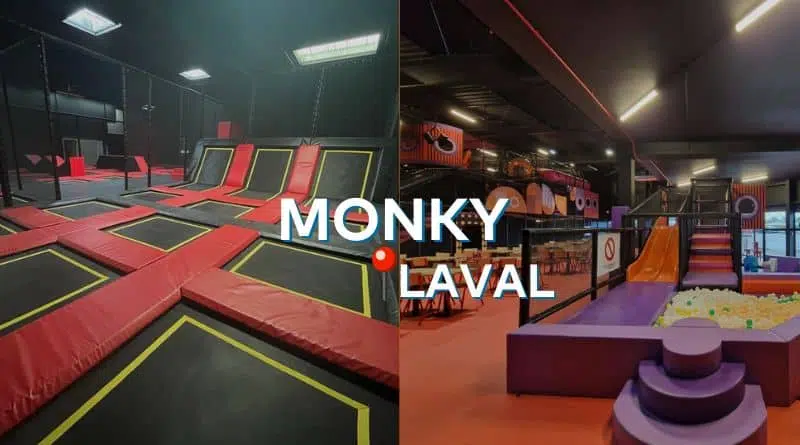
In the dynamic world of leisure complexes, Monky stands out for its innovative approach and its ability to offer a wide range of activities under one roof. To better understand what goes on behind the scenes of this success, we had the opportunity to interview Pierre-Elie Quirion, Monky’s Director of Communication and Marketing. With an impressive career in e-commerce and expertise in business development, Pierre-Elie shares the secrets of Monky’s success, the challenges encountered, and the future ambitions of this multi-activity leisure complex located in Laval. Discover how Monky is transforming the leisure landscape in France and what makes it so unique.
Enjoy your reading!
Could you introduce yourself and tell us a little about your professional background?
Pierre-Elie Quirion: My name is Pierre-Elie Quirion, and I am 33 years old. I started my career in e-commerce as an e-commerce manager, where I was responsible for after-sales service for three years at a company specialising in selling spare parts for garden equipment to private individuals.
Then I joined a major French group called Mericq, a seafood wholesaler. I worked there for two years as an e-commerce project lead and e-commerce manager.
After that experience, I joined an agri-food technopole. These technopoles bring together small teams of experts who support and help young start-ups and businesses to grow and thrive. I stayed there for another two years.
Since April 2024, I have joined the Monky group as Director of Communication and Marketing. We have sites in Laval and Agen, as well as others under construction in Carcassonne, Mont-de-Marsan, etc.
Monky opened in Laval in early 2024. Could you give us an overview of Monky? What activities and services do you offer?
Pierre-Elie Quirion: Monky in Laval opened between the end of 2023 and the beginning of 2024. We offer a wide range of activities and services, including:
- Indoor karting: An indoor karting track for speed enthusiasts.
- Bowling: 16 bowling lanes for fun with family or friends.
- Indoor play area : A safe play space for younger children.
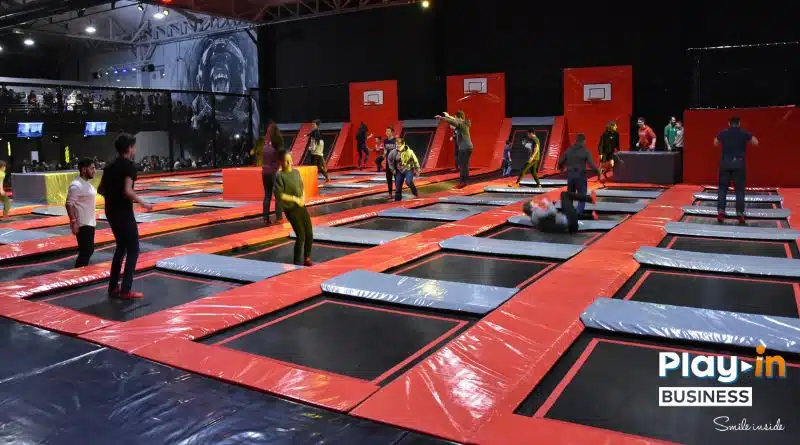
- Trampoline park: A trampoline area to have fun and do acrobatics safely.
- Karaoke rooms: Equipped rooms for unforgettable singing sessions.
- Music quiz rooms: To test your music knowledge in an interactive way.
- Arcade games and virtual reality: A huge arcade with classic and modern games, as well as virtual reality experiences.
- Classic games: Table football, pool tables, and other traditional games.
All Monky complexes also have a brasserie-restaurant, allowing visitors to eat on site between activities or after a day of entertainment.
What motivated you to open a multi-activity leisure complex? Why did you choose this business model?
Pierre-Elie Quirion: The founders of Monky, originally restaurateurs, seized an opportunity following professional meetings. They had the chance to create an arcade in Agen, where at the time there was only a bowling alley. They then thought that offering a variety of activities in one place could energise the region. So they opened Monky in Agen, and given the success they achieved, they decided to open another complex in Laval.
Seeing the success of the Agen and Laval complexes, they structured the company to become a group and began developing projects in other mid-sized cities, such as Mont-de-Marsan and Carcassonne. Other projects are also underway.
Monky’s ambition is to create a multigenerational social venue where everyone can come to have fun and enjoy a good time. The business model is based on the diversity of activities on offer, enabling it to reach a broad audience. Those who are not drawn to games can enjoy the brasserie-restaurant, where we brew our own beer, and relax in a cosy atmosphere.
We have activities for all age groups:
- For ages 0–5: Baby Jump and Baby Parc, safe play areas for toddlers.
- For ages 5–12: Kid Parc, a space designed for children.
- For ages 12 and up: Laser tag, escape game, bowling, jump park, and other activities.
There is no age limit at Monky. The spaces are designed to allow all generations to have fun together, from toddlers to people aged 80 and over. This creates a social venue where generations meet and interact, encouraging exchanges and human connections. It is truly an ideal environment where everyone can have a good time.
Why did you choose Play In Business to build Monky? How did the collaboration go?
Pierre-Elie Quirion: We discovered Play In Business and approached them to build the trampoline park, the play area, and the toddler zone in Laval. The collaboration went very well, and we are truly satisfied with the quality and service provided by Play In Business.
My manager informed me that we will continue to work with Play In Business for the future Monky complexes we are building. This shows that the partnership and collaboration in Laval were beneficial enough for both parties that we are considering using them for all our upcoming projects.
Play In Business met our expectations in terms of safety, and customers really like the venue and use it frequently. The quality of their work is also excellent, which reinforces our decision to continue working with them.
Since opening, how has Monky been performing in terms of visitor numbers? Could you share some key figures?
Pierre-Elie Quirion: Since opening, Monky has enjoyed strong attendance with around 250,000 visitors per year, which is very satisfactory. Monky Laval, which is larger than the one in Agen, attracts even more visitors. To give you an idea, Monky in Agen covers an area of 5,000 m², while Monky Laval spans 7,000 m².
With the opening in Laval, we expect to reach overall figures of 500,000 to 600,000 visitors per year for the two parks combined. Attendance varies depending on the day of the week. For example, we see higher footfall on Tuesdays from 6:00 PM, when people finish work and pick up their children. Weekends, public holidays, and school holiday periods also see high attendance.
During the week, outside of holidays, the complex is relatively quiet until 6:00 PM. After that, attendance increases, especially on Friday evenings and Saturdays, as people take advantage of their free time to come and have fun. In summary, attendance and revenue vary depending on the days and periods, with a trend towards higher footfall at the end of the week and during holiday periods.
Do you think the trend of multi-activity leisure complexes will continue to grow? What do you see as the main success factors?
Pierre-Elie Quirion: The multi-activity leisure complex sector is growing rapidly. In the past, leisure activities such as bowling or escape games were spread across separate venues. Today, the trend is to centralise these activities in one place, which meets growing demand.
This growth is driven by several factors. First, the business model makes it possible to centralise various leisure activities, offering visitors a complete and diverse experience. This meets a modern need for convenience and variety, where people prefer to have access to several entertainment options under one roof.
In addition, although creating a multi-activity leisure complex represents a significant investment due to the required infrastructure, the size of the buildings, and the different equipment, this centralisation makes it possible to maximise the use of resources and optimise costs. As a result, more and more of these leisure complexes are emerging in cities across France, attracting a diverse and loyal audience.
Have you encountered any technical or maintenance issues since opening? If so, how were they resolved?
Pierre-Elie Quirion: No issues, and if there have been any, they were handled properly.
- What has customer feedback been like since Monky opened? Which aspects do they seem to appreciate most?
Pierre-Elie Quirion: Since Monky opened, customer feedback has been very positive. We regularly collect reviews to improve our service quality, and we listen to customer feedback in order to keep improving.
On Google, our rating is between 4.0 and 4.2, which is relatively good, especially given the large number of reviews we receive. Most customers are satisfied with their experience at Monky.
What stands out most in the reviews is appreciation for the diversity of activities on offer. There is no single game or activity that stands out in particular, because customers enjoy everything. That is Monky’s strength: offering a multitude of activities in one place. Customers do not need to travel from one location to another to enjoy different activities.
Our day passes are also very popular. Visitors can arrive in the morning, get a day pass, and enjoy all the activities on offer without having to leave the complex. This allows them to spend a full day of uninterrupted entertainment.
What are your future plans for Monky? Are you considering adding new activities or expanding your facilities?
Pierre-Elie Quirion: We have two major projects underway for Monky.
The first project is to create a large terrace for the restaurant. In addition to this extension, we will add an outdoor games area including a pétanque court, ping-pong tables, and other outdoor games such as palet. These new outdoor leisure activities will offer an enhanced experience for our visitors.
The second project, and undoubtedly the most ambitious, is the launch of a game called “Experimental Park”, which will open soon. This new game concept is similar to an escape game, but on a much larger scale. Experimental Park will include 25 rooms spread over an area of 500 to 1,000 m².
The principle is that participants have one hour to go through these rooms. The rooms unlock based on their performance. For example, if they succeed quickly and efficiently in one room, another room will open in the corridor, allowing them to continue. In general, they can complete between four and seven rooms per hour.
What makes Experimental Park unique is its replayability. Unlike traditional escape games, where you can only play once after solving the puzzles, the rooms in Experimental Park can be replayed at different difficulty levels: easy, medium, and hard. This allows participants to replay the rooms and face new challenges each time.
Upon arrival, players receive an electronic wristband that controls door opening and the activation of mini-games. The 25 rooms offer a variety of challenges including problem-solving, climbing, dexterity, precision, and many more. Each mini-game has its own specific features, offering a diverse and stimulating experience for all participants.
These projects aim to further enrich our visitors’ experience and position Monky as a must-visit destination for family and friends’ entertainment.
What advice would you give to someone considering opening a multi-activity leisure complex?
Pierre-Elie Quirion: It is essential to choose the right location, meaning you must carry out a market and feasibility study before getting started, because creating a complex like Monky or a similar indoor park costs a great deal of money. Having the right positioning is crucial. If you are isolated, far away, or close to other leisure parks, it could work against you. Ideally, you need a strong location, because it makes a big difference. With a good location, you will have natural footfall from people who will come and take an interest in your complex.
Another important point is that the venue must be easy to access. For example, our Monky complexes are often located in retail parks where there is high footfall. However, we had to work with the local council to set up a bus service. This allows young people who do not yet have a driving licence to come easily and provides a solution for people who consume alcohol in our restaurant or bar, enabling them to get home without having to drive. If your complex is located in an area without public transport, this can be an obstacle.